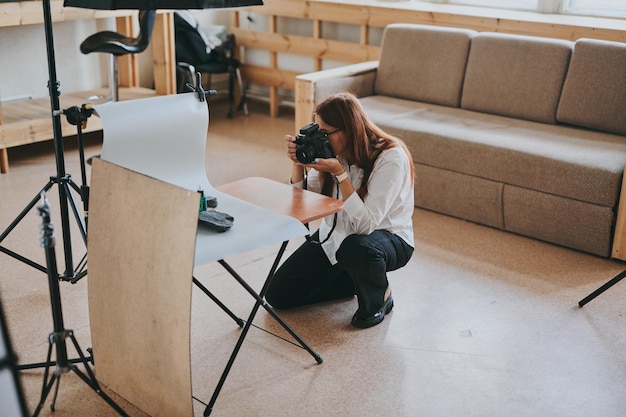
Learning by Doing: Our Practical Teaching Approach
We believe the best way to learn filmmaking is through hands-on experience guided by professionals who understand both the craft and how to teach it effectively.
Back to HomeOur Educational Philosophy
CinemaVision Academy was founded on the understanding that filmmaking is both an art and a craft. While creativity is essential, technical proficiency and professional practices can be systematically taught and developed through structured, practical training.
Evidence-Based Teaching
Our curriculum draws from established filmmaking principles and contemporary industry practices. We focus on techniques that have proven effective across different production contexts and adapt them for various skill levels and learning styles.
Practical Experience Priority
While we cover essential theory, the emphasis is always on application. Students spend more time working with equipment, directing scenes, and solving production challenges than sitting in lectures. Learning happens through doing.
Personalized Guidance
Small class sizes allow instructors to provide individual attention, addressing each student's specific challenges and helping them develop their unique creative voice while mastering fundamental techniques.
Professional Standards
We teach industry-standard workflows and professional practices from the beginning. Students learn to work at a level of quality and organization that prepares them for actual production environments.
The CinemaVision Learning Framework
Our teaching approach follows a structured progression that builds skills systematically while allowing for creative exploration and personal development.
Foundation & Fundamentals
Initial weeks focus on establishing baseline understanding of equipment, terminology, and basic techniques. Students complete structured exercises that build confidence and familiarity with the tools of filmmaking.
- ▸ Equipment operation and safety
- ▸ Industry terminology and concepts
- ▸ Basic technical exercises
- ▸ Professional workflow introduction
Skill Application & Practice
Students apply learned techniques to increasingly complex assignments. Projects are designed to reinforce specific skills while introducing new challenges. Regular feedback helps refine technique and approach.
- ▸ Controlled project assignments
- ▸ Technique refinement through practice
- ▸ Instructor and peer feedback
- ▸ Collaborative work introduction
Independent Creation
Final phase emphasizes autonomous work on substantial projects. Students demonstrate mastery by completing portfolio-quality pieces that showcase their developed skills and personal creative vision.
- ▸ Major project development
- ▸ Creative autonomy and decision-making
- ▸ Professional-quality finishing
- ▸ Portfolio preparation
Personalized Adaptation
While we follow this general framework, each student's journey through it is unique. Instructors adjust pacing, provide additional support where needed, and offer advanced challenges to students who progress quickly. The structured progression provides a roadmap, but flexibility allows us to meet individual learning needs and help each student achieve their potential.
Grounded in Professional Practice
Our teaching methods are informed by established educational principles and current industry standards. We maintain quality through systematic approaches that have proven effective.
Industry-Standard Techniques
We teach methods and workflows that are actively used in professional film production. Our curriculum reflects current industry practices, ensuring students learn approaches that are relevant and applicable in real-world settings. Instructors bring experience from active production careers, keeping content current with evolving industry standards.
Quality Assurance Systems
Regular assessment ensures students are progressing and achieving learning objectives. We use structured evaluation criteria that provide clear feedback on both technical competency and creative development. This systematic approach helps identify areas where additional support may be needed and ensures consistent quality across our programs.
Professional Equipment Standards
Students work with industry-standard equipment and software used in professional productions. This ensures they're learning on tools they'll encounter in the field. We maintain our equipment to professional standards and teach proper handling, care, and troubleshooting approaches that translate directly to production environments.
Continuing Instructor Development
Our teaching staff maintains active involvement in film production and stays current with industry developments. This ongoing professional practice informs their instruction and ensures students benefit from contemporary knowledge rather than outdated approaches. Instructors regularly share insights from current projects and industry changes.
Addressing Common Limitations in Film Education
While there are many paths to learning filmmaking, we've observed certain limitations in conventional approaches that our methodology specifically addresses.
Common Challenge
Theory-heavy programs that spend extensive time on film history and analysis without providing sufficient hands-on production experience.
Our Approach
We balance theoretical understanding with extensive practical work. Students are using equipment and creating projects from early in the course, developing tactile familiarity alongside conceptual knowledge.
Common Challenge
Large class sizes that make individual attention and personalized feedback difficult, leaving students to figure out problems on their own.
Our Approach
Small cohorts allow instructors to work closely with each student, providing specific guidance tailored to individual needs and helping troubleshoot challenges as they arise.
Common Challenge
Programs that treat all filmmaking disciplines the same way, without acknowledging the distinct skills needed for directing, documentary, or production management.
Our Approach
Specialized courses designed specifically for each discipline, with curriculum and projects tailored to the unique demands of directing, documentary production, or production management.
Common Challenge
Outdated equipment and techniques that don't reflect current professional practices, leaving students unprepared for contemporary production environments.
Our Approach
Industry-standard equipment and workflows taught by professionals who actively work in film production, ensuring relevance to current industry practices.
What Makes Our Approach Distinctive
Several elements combine to create a learning experience that effectively develops practical filmmaking capabilities.
Intensive Project-Based Learning
Rather than isolated exercises, students work on substantial projects that integrate multiple skills. This mirrors real production work where various competencies must come together cohesively. Each project builds on previous learning while introducing new challenges.
Active Professional Instructors
Our teaching staff continues to work in film production, bringing current industry insights and real-world problem-solving approaches to their instruction. They understand contemporary challenges and can share practical solutions that actually work in professional contexts.
Focused Specialization
Rather than trying to cover everything superficially, our courses dive deep into specific areas of filmmaking. This allows development of genuine competency in chosen specializations, whether directing, documentary, or production management.
Continuous Curriculum Evolution
We regularly review and update course content based on industry changes, student feedback, and emerging technologies. This ensures our programs remain relevant and continue to provide value as the film industry evolves.
How We Track Student Progress
Clear assessment helps students understand their development and identifies areas where additional focus may be beneficial. We use multiple indicators to evaluate progress comprehensively.
✓ Project Quality Assessment
Completed work is evaluated against clear criteria covering both technical execution and creative effectiveness. This provides concrete feedback on what's working well and what needs improvement.
✓ Technical Competency Checks
Regular assessment of equipment operation, software proficiency, and understanding of technical concepts ensures students are building necessary foundational skills.
✓ Creative Development Review
Instructors monitor each student's creative growth, helping them develop their unique voice while maintaining professional standards and effective communication.
✓ Portfolio Readiness Evaluation
Final projects are assessed for professional presentation quality, ensuring students complete the course with work that effectively demonstrates their capabilities to potential employers or collaborators.
Setting Realistic Expectations
Our courses provide intensive training in specific aspects of filmmaking, but they represent a beginning rather than an endpoint. We aim to equip students with solid foundations and practical skills they can continue building upon. Success in filmmaking requires ongoing practice, continued learning, and persistence beyond any single course.
Students who complete our programs should feel confident working on productions at their skill level and have clear understanding of how to continue developing their abilities. The goal is to transform aspirations into actionable capabilities while maintaining realistic perspectives about the work required for professional achievement.
Professional Film Education Methodology in Tokyo
CinemaVision Academy's teaching methodology reflects years of experience in both film production and education. Our approach emphasizes practical skill development through structured, hands-on learning that prepares students for real-world production environments. Located in Tokyo's Meguro district, we provide access to professional equipment and industry-standard workflows that mirror contemporary filmmaking practices.
The foundation of our methodology rests on active learning principles where students develop capabilities through doing rather than passive observation. Each course follows a progressive framework that builds complexity gradually, allowing students to master fundamentals before advancing to more challenging concepts. This systematic approach, combined with small class sizes and personalized instruction, creates an environment where genuine skill development can occur.
What distinguishes our programs is the integration of professional standards from the beginning. Rather than treating film education as preparation for eventual professional work, we teach students to work at professional levels from early in their training. This includes industry-standard equipment, proper production protocols, and the organizational systems used in actual film productions. Students learn not just creative and technical skills, but also the professional practices that make them effective collaborators on productions.
Our instructors bring current production experience to their teaching, ensuring curriculum reflects contemporary industry realities rather than outdated approaches. This connection to active professional practice keeps our programs relevant and provides students with insights into current opportunities and challenges in ese and international filmmaking. The specialized nature of our courses allows deep focus on specific disciplines, developing genuine competency in directing, documentary production, or production management rather than superficial familiarity across all areas of filmmaking.
Experience Our Approach to Film Education
Learn more about how our practical, hands-on methodology can help you develop the skills you need for filmmaking. Contact us to discuss which program might be right for your goals.
Get Started Today